

Signs a Commercial Heat Exchanger is Failing and Why You Shouldn’t Ignore Them
In a commercial setting, heating systems rarely get the spotlight, until something goes wrong. A failing heat exchanger isn’t always dramatic or obvious at first, but it can quietly derail efficiency, disrupt business operations, shorten equipment lifespans, and increase running costs long before a full breakdown takes place.
For commercial building operators, facilities managers, and business owners alike, spotting the early signs is essential, and catching these issues early protects heating reliability, helps maintain compliance requirements, and keeps energy budgets under control, especially when systems are expected to work harder during the colder months.
But what exactly should you be looking for, and why do heat exchangers develop faults in the first place? Let’s dive in.
What Does a Heat Exchanger Do?
To appreciate when a heat exchanger might be failing, it helps to understand its role inside a commercial HVAC system.
A heat exchanger is the component responsible for transferring heat from the combustion or heating source into the building’s airflow or heating water system. When it’s operating correctly, it delivers warmth efficiently and safely, allowing the system to meet your heating demands without wasting energy.
However, when the heat exchanger begins to degrade or crack, its performance drops quickly. That means more energy is burned, less output is delivered, and the system must work harder to achieve the same result.
And that’s where the trouble begins.
Why They Fail
Heat exchangers are exposed to harsh operating conditions every day, high temperatures, constant thermal cycling, airflow variations, and particulate contamination, in many systems. Over time, these stresses take a toll.
The most common causes of failure in commercial systems include:
1. Dirt and Blockage
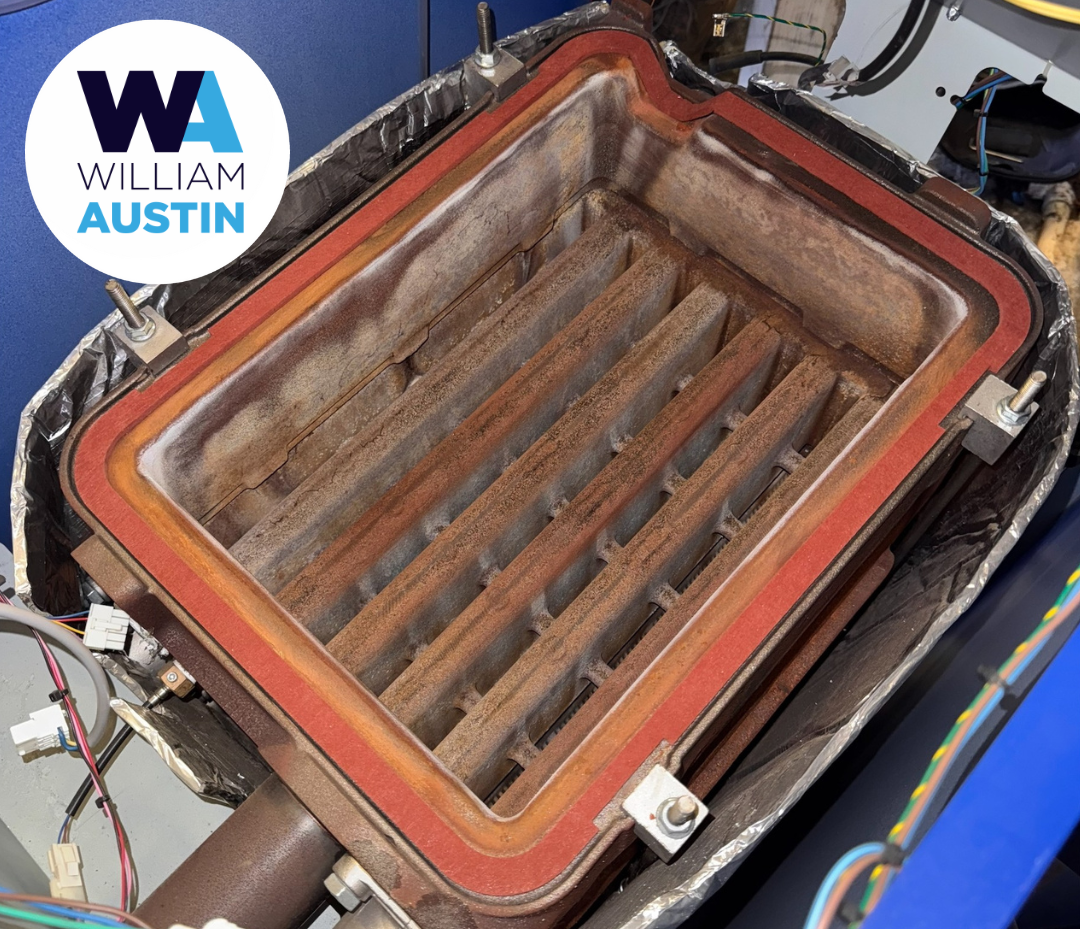
Dust, soot, and airborne contaminants gradually coat the heat exchanger surface. This restricts heat transfer, forcing the system to work harder and run longer.
2. Overheating and Poor Airflow
Malfunctioning fans, clogged filters, or obstructions in ductwork can reduce airflow. When heat has nowhere to go, the exchanger overheats, accelerating wear and risking structural damage.
3. Metal Fatigue and Thermal Stress
Constant expansion and contraction gradually weaken metal surfaces. In heavy commercial environments, this effect is amplified by long runtime hours.
4. Corrosion
Moisture, chemical contamination, or condensation inside a system can corrode internal surfaces. This often develops quietly and spreads before anyone notices a problem.
Understanding these causes helps you see why early detection and good preventative maintenance are so important, and why heat exchanger deterioration rarely fixes itself.
Early Warning Signs of a Failing Heat Exchanger
Heat exchangers don’t usually fail overnight. Instead, they leave a trail of clues that something isn’t quite right. Here are the most common symptoms facilities teams should look out for:
1. Reduced Heating Output
Rooms taking longer to warm up? Zones not reaching set temperature? This is one of the biggest indicators that heat transfer has become inefficient.
2. Rising Energy Usage
If energy consumption steadily climbs without an obvious cause, the heat exchanger may be restricting efficiency, and commercial sites often spot this first on utility reports.
3. Excessive System Cycling
Short cycling, turning on/off repeatedly, suggests the system is struggling to reach target temperatures, or is overheating internally.
4. Strange Noises During Operation
Whistling, rumbling, and metallic pinging noises can hint at airflow issues, thermal distortion, or component fatigue.
5. Poor Air Quality Indoors
Dust, contaminants, or inconsistent airflow through a commercial space may indicate that the exchanger and associated components are not operating cleanly or efficiently.
6. Visible Surface Damage
During a planned inspection, engineers sometimes spot:
Discolouration
Cracking
Warping
These are signs the heat exchanger is nearing the end of life.
The Role of Planned Maintenance
A well-maintained commercial heating system has a dramatically lower risk of heat exchanger failure.
Routine servicing allows trained HVAC engineers to:
Remove heat exchanger fouling and build-up
Check airflow and fan performance
Monitor temperature profiles
Identify early metal fatigue
Verify that controls and burners are operating efficiently
Prevent overheating and repeated stress cycles
Just as critically, planned maintenance ensures small anomalies are caught before they become major disruptions. Many failures we see in commercial systems are preventable, if issues are flagged before efficiency loss becomes equipment failure, or business downtime. If your business relies on dependable heating performance or uptime-critical environments, a consistent maintenance programme is one of the most cost-effective tools you have.
Why Early Action Matters
Heat exchangers often sit at the heart of large heating systems, and when they struggle, the entire system struggles too.
Addressing performance drops swiftly helps:
Protect uptime across your building
Reduce heating costs during periods of heavy demand
Support energy efficiency goals
Safeguard long-term equipment life
Maintain comfortable and productive working environments
Ignoring early warning signs can quickly snowball into emergency repair costs, unplanned outages, and more extensive system damage.
Final Thoughts
Heat Exchanger issues rarely announce themselves loudly at first, but they do send signals. Facilities and operations teams who stay alert to changes in heating performance can save money, avoid downtime, and extend the life of their commercial HVAC systems.
Whether you’re running offices, a school, a warehouse, or a complex commercial estate, identifying symptoms early and pairing them with planned servicing gives you control over your heating reliability.
If you’d like clarity on what your system needs, or support diagnosing a possible issue, we’re here to help keep your equipment running at its best.
Written by Will Judd
Published: 29/01/2026