

How Chillers Work in Commercial HVAC Systems And Why They Matter
In many commercial buildings, cooling systems operate quietly in the background, maintaining comfortable environments without drawing much attention. Offices stay productive, equipment remains within safe operating temperatures, and day-to-day operations continue without disruption.
But when cooling performance begins to drop, temperatures rise, systems struggle to cope during peak demand, or energy costs start to climb, the issue often leads back to one key piece of equipment:
The chiller.
For facilities managers, building operators, and business leaders, understanding how chillers work, and why they are critical to overall HVAC performance, is essential. While they may sit outside or on rooftops, often out of sight, their role in maintaining reliable cooling across a building is significant.
So, how do chillers actually work, and why do they matter in commercial environments?
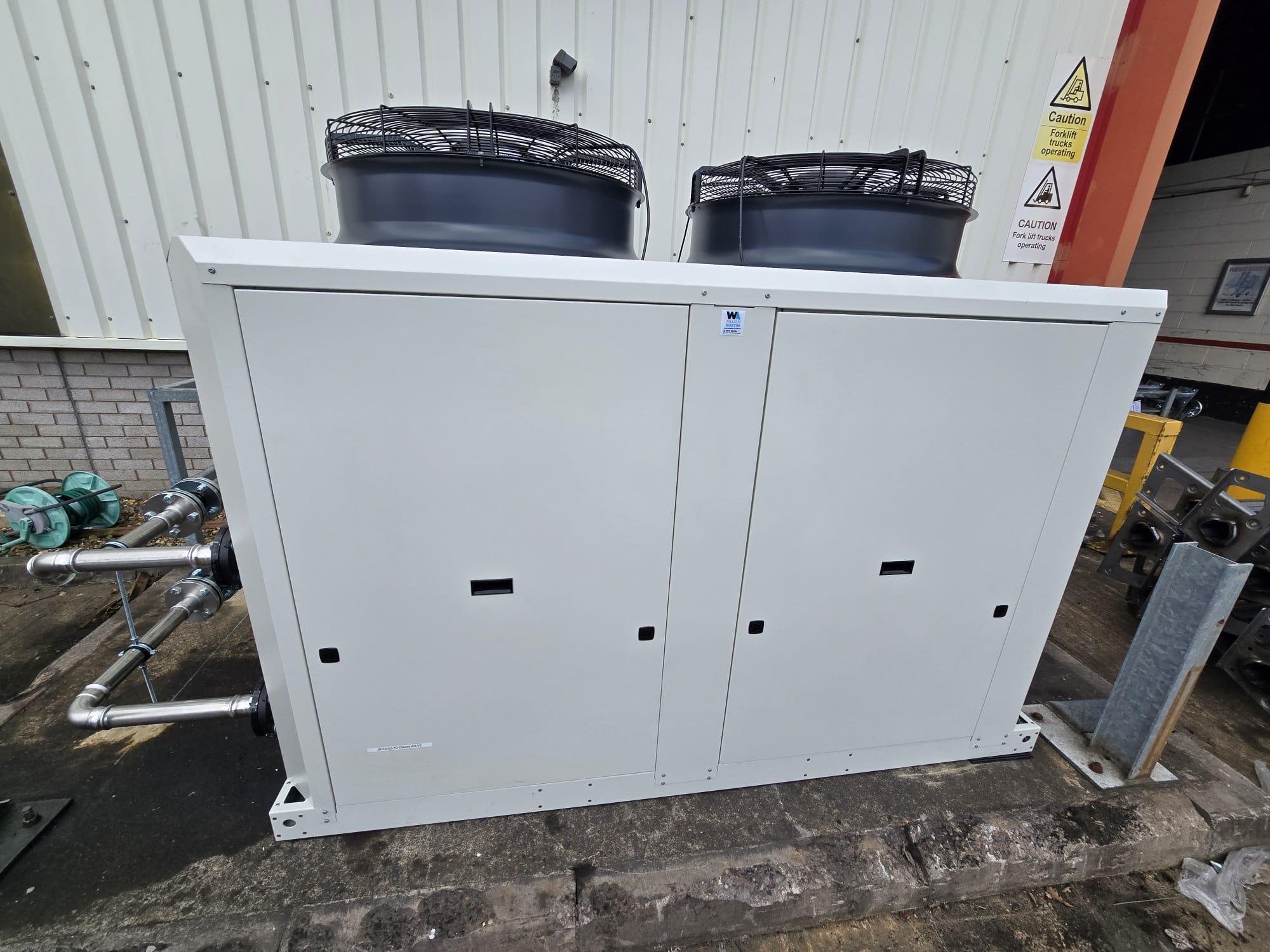
What Is a Chiller?
A chiller is a system designed to remove heat from a building and transfer it to the outside air.
Rather than directly cooling air like a traditional air conditioning unit, a chiller works by producing chilled water, which is then circulated through the building to provide cooling via:
Air handling units (AHUs)
Fan coil units
Cooling coils within ventilation systems
This makes chillers particularly well suited to larger commercial buildings, where centralised cooling is more efficient and easier to control.
How Do Chillers Work?
Chillers operate using a refrigeration cycle, similar in principle to many HVAC systems, but on a larger scale.
In simple terms, the process works as follows:
Heat is absorbed from the building into the chilled water system
That heat is transferred to a refrigerant within the chiller
The refrigerant is compressed, raising its temperature
The heat is then rejected to the outside air via condenser fans
The cooled refrigerant continues the cycle
This continuous process allows the system to maintain consistent internal temperatures, even during periods of high demand.
Unlike water-cooled systems, chillers use ambient air to reject heat, removing the need for cooling towers and reducing overall system complexity.
Why Chillers Matter in Commercial Buildings
In commercial environments such as offices, schools, healthcare facilities, and industrial sites, cooling demand can vary significantly throughout the day.
Without reliable chiller performance, buildings can experience:
Inconsistent internal temperatures
Reduced occupant comfort
Increased strain on HVAC equipment
Higher energy consumption
Risk of system downtime
Because chillers sit at the centre of the cooling system, their performance directly affects every conditioned space within the building.
For facilities teams, this means that maintaining chiller efficiency is not just about cooling, it is about protecting overall building performance.
How Chillers Support Energy Efficiency
Energy efficiency in commercial HVAC systems is not just about reducing power usage, it is about ensuring systems operate in a controlled, balanced way.
Modern chillers achieve this through:
Load Matching and Capacity Control
Chillers adjust output based on cooling demand, rather than running at full capacity continuously. This reduces unnecessary energy use during off-peak periods.
Advanced Compressor Technology
Scroll compressors, often used in commercial chillers, provide efficient, reliable performance with fewer moving parts compared to older systems.
Integrated Controls and BMS Integration
When connected to a Building Management System (BMS), chillers can respond dynamically to building conditions, improving overall system efficiency.
Reduced System Complexity
Air-cooled systems eliminate the need for additional water treatment and cooling tower infrastructure, which can reduce maintenance requirements and associated energy use.
The result is a system that delivers consistent cooling while minimising wasted energy.
Common Issues That Affect Chiller Performance
Despite their reliability, chillers can experience performance issues if not properly maintained or configured.
Some of the most common include:
Dirty or Blocked Condenser Coils
Restricted airflow reduces the system’s ability to reject heat, forcing it to work harder and consume more energy.
Refrigerant Issues
Low or imbalanced refrigerant levels can significantly impact cooling performance and efficiency.
Poor Control Settings
Incorrect setpoints or scheduling can result in systems running unnecessarily or failing to meet demand.
Mechanical Wear
Components such as fans, compressors, and electrical parts naturally degrade over time.
Lack of System Visibility
Without regular monitoring, performance issues can develop gradually and go unnoticed until they affect building comfort.
These issues rarely happen overnight. Instead, they develop over time, often leading to increased energy costs and reduced reliability if not addressed.
The Role of Maintenance and System Optimisation
Planned maintenance is essential to ensuring chillers continue to operate efficiently and reliably.
Routine inspections allow engineers to:
Clean and inspect condenser coils
Check refrigerant levels and system pressures
Review control settings and performance data
Identify early signs of wear or inefficiency
Ensure the system is aligned with current building demand
Commercial buildings are rarely static. Changes in occupancy, usage patterns, or internal layouts can all affect cooling requirements.
A system that was correctly specified at installation may require adjustment and optimisation over time to maintain peak performance.
Why Early Attention Makes a Difference
Because chillers sit at the centre of the cooling system, even small inefficiencies can have a widespread impact.
Proactive management of chiller performance helps to:
Maintain consistent cooling across all areas of the building
Reduce energy consumption and operating costs
Prevent unexpected system failures
Extend the lifespan of critical plant equipment
Improve overall HVAC system reliability
In many cases, the difference between an efficient system and an underperforming one comes down to regular oversight and professional support.
Final Thoughts
Chillers are a fundamental part of many commercial HVAC systems. While they may operate in the background, their influence on building performance, energy efficiency, and occupant comfort is significant.
For facilities managers and building operators, understanding how these systems work, and ensuring they are properly maintained and optimised, is a key step towards reducing costs and improving reliability.
At William Austin, we support businesses across the UK, including the West Midlands, with the maintenance, optimisation, and installation of commercial HVAC systems.
If you are experiencing issues with your chiller, or want to ensure your system is operating as efficiently as possible, get in touch with our team today.
Written by Will Judd