

Does Your Commercial Heat Exchanger Need Replacing, Not Just Servicing?
A commercial heat exchanger that isn't performing as it should doesn't always make the decision easy. The system is still running. The building is still heated. And the instinctive response, from both facilities teams and engineers, is often to service it, clean it, and see how it goes.
In many cases, that's the right call. Routine servicing can restore meaningful performance to a heat exchanger that has simply accumulated fouling or scale over time. But in others, servicing is little more than a temporary measure, one that delays an inevitable replacement while continuing to consume energy, stress connected components, and quietly increase the risk of an unplanned failure.
Knowing the difference matters. And it starts with understanding what to look for.
Visible Corrosion and Physical Deterioration
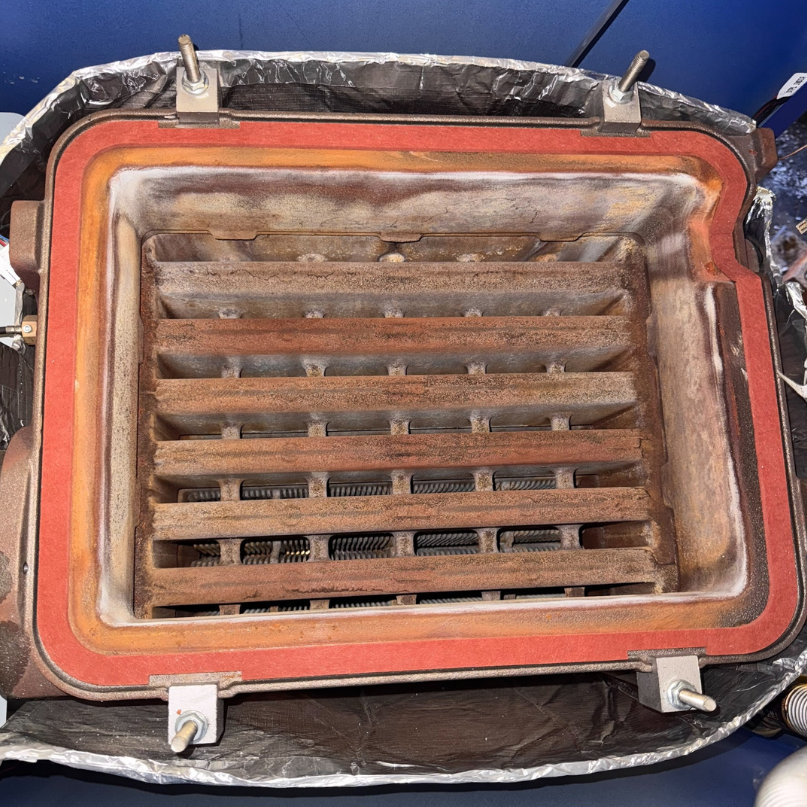
Surface fouling and scale are normal. They develop over time and are addressed through routine cleaning and maintenance. Corrosion is a different matter entirely.
When rust, pitting, or physical deterioration is visible on heat exchanger surfaces, particularly on the internal baffles, tubes, or plates, the integrity of the component itself is compromised. Corrosion doesn't reverse with cleaning. It continues to develop, weakening the structure of the heat exchanger and increasing the likelihood of leaks, cross-contamination between circuits, or sudden failure under operating pressure.
A heat exchanger showing significant corrosion is not a servicing problem. It is a replacement conversation.
Persistent Performance Issues Despite Servicing
One of the clearest indicators that a heat exchanger is approaching end of life is a pattern of declining performance that servicing fails to resolve.
If a unit has been cleaned, inspected, and returned to service, only for temperatures to remain inconsistent, heat transfer to stay below expectations, or energy consumption to continue rising, the problem is unlikely to be fouling. More commonly it reflects internal deterioration that isn't visible from the outside and can't be addressed through maintenance alone.
When performance fails to recover after a thorough service, replacement should be the next conversation rather than a repeat of the same intervention.
Frequent Leaks or Pressure Loss
Occasional minor leaks can be addressed through repair. A heat exchanger that develops repeated leaks, or one where pressure loss across the unit continues despite remedial work, is signalling something more fundamental.
In plate heat exchangers, gasket degradation is a common cause of leaking. Gaskets can be replaced, and in many cases this is a cost-effective solution that extends operational life. But where the plates themselves are corroded, warped, or physically damaged, gasket replacement addresses only part of the problem. The underlying integrity of the unit remains compromised.
In shell and tube configurations, tube failures, particularly in older units, can similarly reach a point where repair is no longer economical or reliable. When multiple tubes have failed or when the tube bundle shows widespread deterioration, full replacement is almost always the more sensible long-term decision.
Age and Obsolescence
Commercial heat exchangers are durable pieces of equipment. Well maintained, they can provide many years of reliable service. But like all mechanical plant, they have a finite operational lifespan, and as they age, the economics of continued maintenance begin to shift.
An older heat exchanger operating in a system that has since been upgraded or modified may no longer be appropriately specified for its current duty. It may be less efficient than modern equivalents, more difficult to source parts for, and increasingly expensive to maintain relative to the cost of replacement.
When a heat exchanger is approaching or has exceeded its expected service life, and particularly when it is requiring increasing levels of maintenance attention, the case for planned replacement rather than reactive repair becomes difficult to argue against.
What the Condition of Your Heat Exchanger Is Actually Telling You
The condition visible inside a heat exchanger during a service visit is one of the most informative indicators of overall system health available to a facilities team.
Heavy corrosion, significant scale accumulation, physical damage to internal surfaces, or evidence of prolonged water quality issues are all signs that the heat exchanger has been operating under conditions that have accelerated its deterioration. In some cases the heat exchanger itself may be the primary problem. In others it is a symptom of wider system issues, water treatment failures, chemical imbalances, or prolonged deferred maintenance, that will continue to affect any replacement unit unless the underlying causes are addressed at the same time.
This is why a thorough assessment of system condition, not just the heat exchanger in isolation, is an essential part of any replacement decision.
Repair or Replace, Making the Right Call
The decision between repair and replacement is rarely straightforward, and it shouldn't be made on cost alone. A repair that restores short-term function while leaving a deteriorating unit in place may prove more expensive over a two or three year horizon than a planned replacement carried out at the right time.
The right decision depends on the age and condition of the unit, the nature and frequency of the problems it is presenting, the cost and availability of parts, and the broader condition of the system it sits within. It requires an honest assessment from an experienced engineer, one who understands both the immediate options and the longer-term implications of each.
Final Thoughts
A commercial heat exchanger that is corroded, repeatedly leaking, or consistently underperforming despite servicing is communicating something clearly. The question is whether that message is being heard early enough to act on it in a planned, cost-controlled way, or whether it will eventually be heard as an emergency.
At William Austin, we carry out heat exchanger assessments, servicing, and replacement across a wide range of commercial buildings throughout the UK. If you're unsure whether your heat exchanger needs servicing or replacing, our team is always happy to give you an honest assessment.
Written by Will Judd