

How Commercial Expansion Vessels Protect Heating System Efficiency and Reliability
In many commercial buildings, heating systems operate quietly in the background, maintaining comfortable internal temperatures without drawing attention. Classrooms remain warm, office spaces stay consistent, and occupants rarely think about the plant room.
But when system pressure begins to fluctuate, safety valves discharge unexpectedly, or boilers repeatedly lock out, the issue often traces back to one overlooked component: the expansion vessel.
For directors, facilities managers, and building owners across the UK, understanding how commercial expansion vessels function, and why correct specification and maintenance matter, is essential for protecting system reliability and long-term efficiency.
While they may appear to be simple steel cylinders within a plant room, expansion vessels play a critical role in maintaining stable, sealed heating systems.
So, what exactly does a commercial expansion vessel do, and why is it so important in busy environments such as schools, offices, and public buildings?
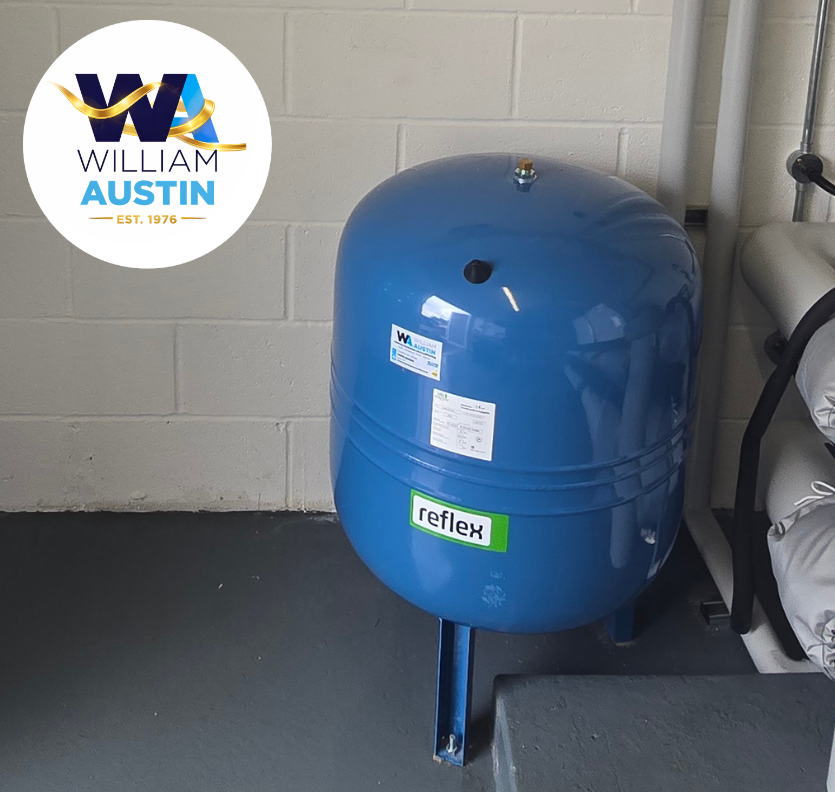
What Is a Commercial Expansion Vessel?
A commercial expansion vessel is a pressurised tank designed to manage water expansion within a sealed heating or chilled water system.
When water is heated, it expands. In an open system, this expansion can be accommodated naturally. In a sealed commercial heating system, however, the expanding water must be absorbed safely to prevent excessive pressure build-up.
Inside the vessel is a diaphragm or bladder that separates:
System water
A pre-charged air cushion
As water temperature increases and volume expands, it compresses the air cushion inside the vessel. This controlled compression stabilises system pressure and prevents stress on boilers, pumps, pipework, and safety valves.
Without a correctly functioning expansion vessel, pressure can rise rapidly, leading to operational disruption and potential equipment damage.
Why Expansion Vessels Matter in Commercial Buildings
In high-occupancy commercial environments, including schools, office developments, healthcare facilities, and mixed-use sites, heating demand fluctuates constantly.
Morning warm-up cycles, varying occupancy levels, and changing weather conditions all influence system temperatures and pressures.
If expansion is not properly managed, buildings may experience:
Pressure relief valve discharge
Frequent boiler lockouts
Inconsistent heating performance
Increased mechanical strain
Higher maintenance costs
Expansion vessels provide a critical buffer within the system. By absorbing thermal expansion, they reduce stress across the entire heating circuit.
For facilities teams, this means fewer emergency callouts and improved operational continuity, particularly in environments where downtime carries reputational or operational risk.
How Expansion Vessels Support System Efficiency
Efficiency in commercial HVAC systems is not solely about reducing energy consumption. It is also about maintaining balanced, stable operation.
Stable pressure contributes to:
Consistent circulation
Reduced boiler short cycling
Improved pump performance
Lower mechanical wear
When pressure fluctuates excessively, system components work harder to compensate. Over time, this increases wear and reduces reliability.
Correctly sized and maintained expansion vessels help ensure heating systems operate within design parameters, supporting both efficiency and longevity.
In busy commercial buildings across the UK, that stability makes a measurable difference over the lifecycle of plant equipment.
Common Issues That Affect Expansion Vessel Performance
Despite their importance, expansion vessels are often overlooked during routine inspections.
Common issues seen in commercial plant rooms include:
Loss of Air Charge
If the pre-charge pressure drops, the vessel cannot absorb expansion effectively. This often leads to repeated pressure drops or frequent system topping up.
Diaphragm Failure
A ruptured diaphragm causes the vessel to become waterlogged. When this happens, it no longer provides pressure protection.
Incorrect Sizing
An undersized vessel cannot accommodate full expansion volume, particularly in larger commercial systems.
Ageing and Corrosion
Over time, external corrosion or internal degradation can compromise structural integrity.
These issues rarely appear suddenly. Instead, performance gradually declines unless proactively assessed as part of planned maintenance.
The Role of Servicing and Ongoing Maintenance
Commercial buildings evolve over time. Changes in occupancy, heating demand, or plant upgrades can all affect system dynamics.
Routine inspection and servicing of expansion vessels allow engineers to:
Verify pre-charge pressure
Confirm diaphragm integrity
Assess corrosion and structural condition
Ensure compatibility with system operating pressures
Review system balancing
Proactive maintenance is not simply about preventing breakdown. It ensures the heating system continues to operate as intended, particularly in high-demand environments such as schools and commercial workplaces.
Why Early Attention Prevents Larger Problems
Because expansion vessels influence system pressure across the entire heating circuit, minor inefficiencies can escalate into larger operational concerns.
Proactive oversight helps to:
Maintain consistent heating performance
Reduce unplanned downtime
Protect boilers and pumps
Control operational costs
Extend plant lifespan
In many cases, recurring pressure issues stem from a vessel that has gradually lost effectiveness rather than from the boiler itself. Identifying this early prevents unnecessary disruption.
Final Thoughts
Commercial expansion vessels may not attract attention when systems are operating correctly, but their role in protecting heating system performance is significant. By managing thermal expansion within sealed systems, they safeguard equipment, maintain pressure stability, and support long-term reliability. For facilities managers and decision makers, ensuring these components are correctly specified, installed, and maintained is a practical step towards protecting comfort, controlling risk, and maintaining operational continuity.
At William Austin, we support commercial clients across the UK with installation, servicing, and optimisation of heating and HVAC systems. If you would like to review your plant room pressure performance or understand how your expansion vessel is operating, our team is always happy to provide guidance.
Written by Will Judd
Published: 19/02/2026