

How Twin-Head Circulation Pumps Improve Efficiency and Reliability in Commercial HVAC Systems
In many commercial buildings, pumps operate quietly behind the scenes, rarely drawing attention when heating and cooling systems are performing as expected. Temperatures remain stable, comfort levels feel consistent, and energy consumption stays within anticipated limits.
But when performance begins to drift, rooms take longer to heat or cool, energy costs rise, or systems struggle to respond to demand, circulation pumps are often at the centre of the issue.
For directors, building owners, and facilities managers, understanding how twin-head circulation pumps function, and why their configuration matters, is key to maintaining efficient, reliable HVAC systems. While they may not be the most visible components within a plant room, they play a critical role in how effectively heating and cooling is delivered across a building.
So, what makes a twin-head pump different, and why does it matter in commercial HVAC environments?
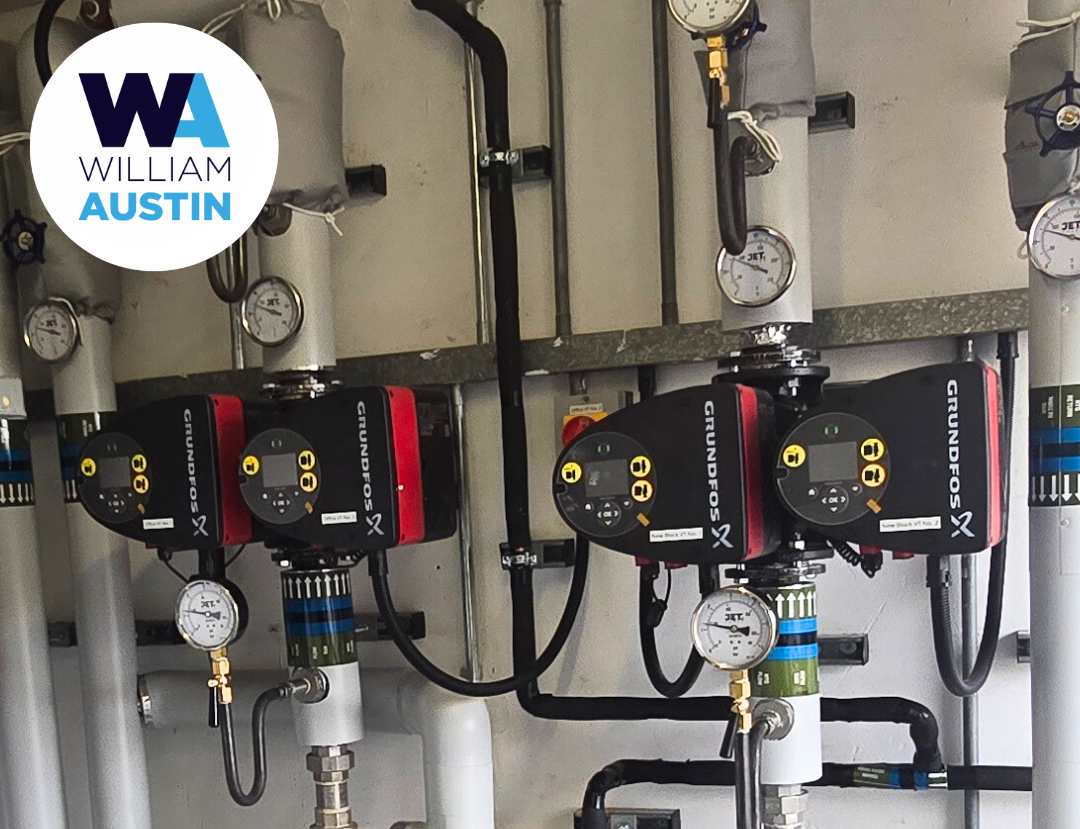
What Is a Twin-Head Circulation Pump?
A twin-head circulation pump incorporates two pump heads within a single casing. Rather than relying on a single motor and impeller, the system is designed to provide either:
Duty/standby operation, where one pump runs while the other remains on standby
Automatic changeover, allowing pumps to alternate and share operating hours
Duty/assist operation, where both pumps operate together during periods of higher demand
This configuration introduces a layer of resilience that single-head pumps cannot provide. If one pump requires maintenance or experiences a fault, the second pump can continue circulating water, maintaining heating or cooling across the building with minimal disruption.
In commercial environments where downtime carries financial, operational, or reputational risk, that redundancy is not simply convenient, it is critical.
We installed these pumps in a major installation at a school in Redditch, you can read about the project by following this link here: Work Item - School in Redditch — William Austin Services
Why Twin-Head Pumps Matter in Commercial Buildings
Circulation pumps serve the entire heating or chilled water circuit. Their performance directly affects temperature stability, system response times, and overall energy efficiency.
In offices, schools, healthcare facilities, and other commercial properties, inconsistent circulation can lead to:
Uneven temperatures
Slow system response
Increased strain on boilers, chillers, and heat exchangers
Rising energy consumption
Twin-head pumps address one of the most significant operational risks: system interruption.
Because they provide built-in redundancy, they reduce the likelihood of complete circulation failure. For facilities teams, this means fewer emergency callouts, less disruption to occupants, and improved continuity of service.
Over time, this reliability contributes just as much to operational efficiency as energy savings alone.
How Twin-Head Pumps Improve Energy Efficiency
Efficiency in commercial HVAC systems is not only about reducing electrical consumption, it is about maintaining balanced, controlled operation across the entire system.
Modern twin-head circulation pumps are typically equipped with integrated electronic controls that allow variable speed operation. This enables the pump to adjust output in response to system demand, reducing energy use during periods of lower load.
Beyond modulation, twin-head pumps improve efficiency through:
Load Matching and Demand Response
By adjusting speed and, in some configurations, engaging both pump heads when required, the system delivers appropriate flow without excessive energy use.
Reduced Wear Through Automatic Rotation
Automatic duty rotation ensures both pump heads share operating hours evenly. This reduces uneven wear, extends equipment lifespan, and helps maintain consistent performance.
Lower Risk of Oversizing and Over-Running
When configured correctly, twin-head pumps can operate more flexibly than fixed-speed single pumps, supporting better system balancing and pressure control.
The result is a more stable system that responds to real-world building demand rather than operating at full capacity unnecessarily.
Common Issues That Affect Twin-Head Pump Performance
Despite their advantages, twin-head pumps still require proper configuration and maintenance. Common issues seen in commercial plant rooms include:
Incorrect Setup or Control Parameters
If duty rotation or pressure settings are not configured correctly, one pump may operate disproportionately, leading to premature wear.
Poor Integration with the BMS
Without proper communication between pumps and the building management system, changeover functions and demand response may not operate as intended.
Mechanical Wear Over Time
Bearings, seals, and internal components naturally degrade. Without inspection and monitoring, declining performance may go unnoticed.
Lack of System Visibility
Facilities teams may not always be aware of whether both pump heads are operating correctly or rotating as intended, especially in older installations.
These challenges rarely appear overnight. Instead, performance gradually declines unless proactively reviewed.
The Role of Maintenance and System Optimisation
Planned maintenance plays a crucial role in ensuring twin-head pumps continue to deliver both efficiency and reliability.
Routine inspections allow engineers to:
Verify duty/standby operation
Check automatic changeover functionality
Assess wear across both pump heads
Confirm control settings align with current building demand
Review overall system balancing
Commercial buildings often evolve over time. Changes in occupancy levels, usage patterns, or building layout can alter flow requirements significantly. A twin-head pump that was correctly specified at installation may benefit from adjustment as system demands shift.
Optimisation is not simply about preventing breakdowns. It is about ensuring the HVAC system continues to operate efficiently, reliably, and in line with how the building is actually used.
Why Early Attention Makes a Difference
Because circulation pumps influence the performance of the entire heating or cooling circuit, small inefficiencies can quickly scale into larger operational issues.
Proactive oversight of twin-head pumps helps to:
Maintain consistent heating and cooling across occupied spaces
Protect against unexpected downtime
Control energy consumption and operating costs
Reduce strain on associated HVAC equipment
Extend the lifespan of major plant assets
In many cases, the difference between a resilient, efficient system and an underperforming one comes down to correct configuration, visibility, and ongoing professional support.
Final Thoughts
Twin-head circulation pumps may not be the most visible components within a plant room, but their impact on commercial HVAC performance is significant. By combining built-in redundancy with modern control capability, they support both operational resilience and energy efficiency.
For directors, building owners, and facilities managers, understanding how these systems function, and ensuring they are correctly maintained and optimised, is a practical step towards protecting comfort, controlling costs, and reducing risk.
At William Austin, we work closely with businesses across the UK to maintain, optimise, and support commercial HVAC systems as long-term partners. If you would like guidance on reviewing twin-head pump performance or understanding how your system is operating, our team is always happy to help.
Written by Will Judd
Published: 12/02/2026