

Why Pipe Lagging Matters More Than You Think
In most commercial plant rooms and rooftop plant areas, pipe lagging is one of those things nobody notices, until it stops doing its job.
It doesn't hum like a pump, flash a fault code like a BMS, or trip like a circuit breaker. It just sits there, wrapped around chilled water and heating pipework, quietly doing exactly what it's supposed to do. Which is exactly why, when it fails, it tends to go unnoticed for months.
For facilities managers and building owners, that's the problem. A damp patch on a ceiling below pipework, or a pool of water under a plant room run, often gets written off as a leak. Sometimes it is. But more often than not, it's condensation, and the real issue is insulation that's cracked, perished, or simply never been checked.
What Does Pipe Lagging Actually Do?
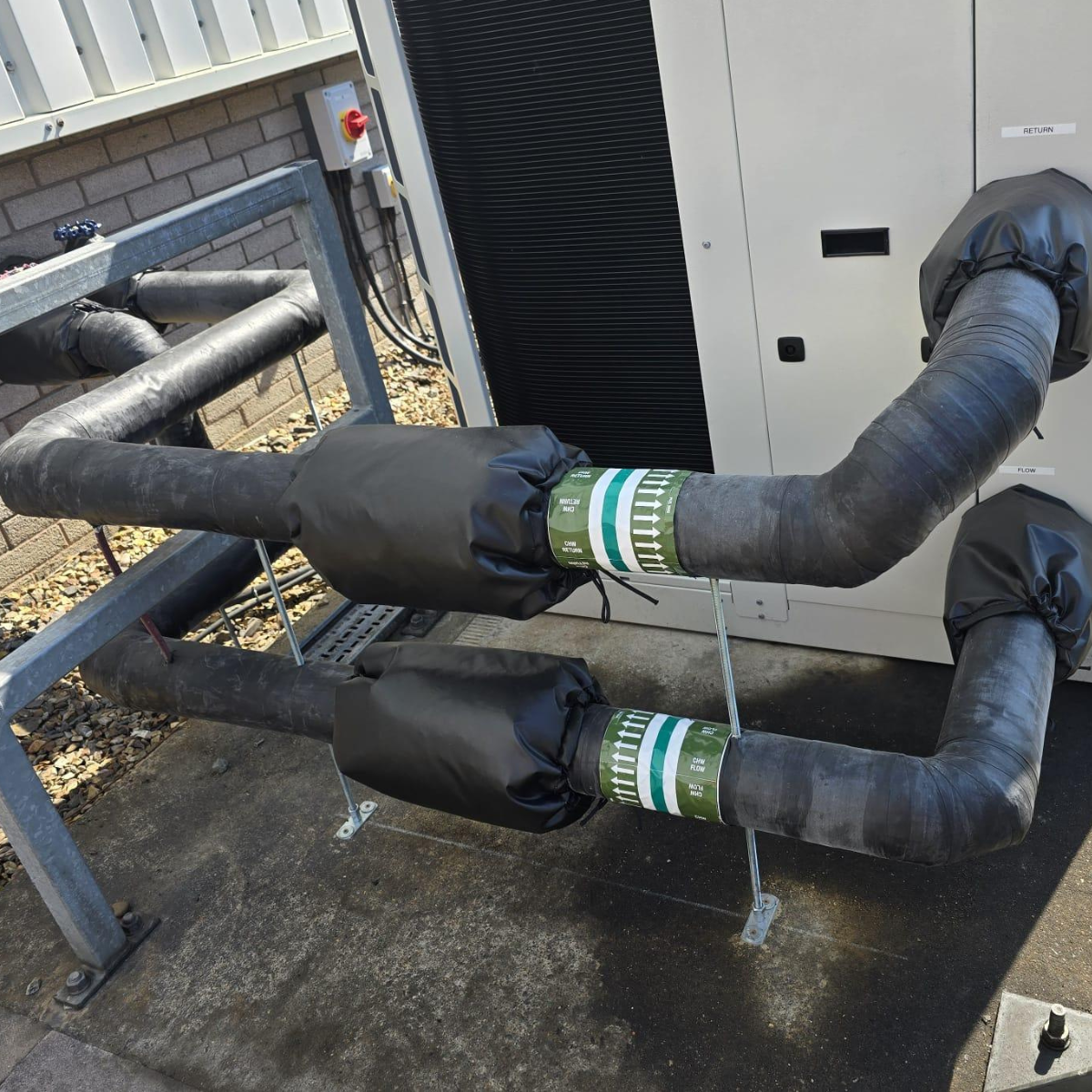
Pipe lagging, usually a closed-cell foam insulation like Armaflex, is fitted around chilled water flow and return pipework as well as heating pipework to do two jobs.
First, it stops condensation. Chilled water pipes run below the ambient dew point, so without insulation, moisture in the air condenses on the pipe surface, the same way a cold drink sweats on a warm day. Left unchecked, that moisture drips, pools, and eventually causes damp, staining, or worse.
Second, it reduces thermal gain and loss. Insulated pipework keeps chilled water cold and heating water hot for longer, so the system doesn't have to work as hard to maintain temperature. Less strain on the plant means lower energy consumption and less wear over time.
Done properly, with rigid lagging on straight runs and removable insulation jackets over valves and fittings for access, it's a small, unglamorous part of the system that has a real impact on efficiency.
Why Lagging Fails
Insulation doesn't usually fail overnight. Like most things in a plant room, it degrades gradually:
UV exposure on rooftop or externally mounted pipework causes the foam to crack and become brittle.
Physical damage from foot traffic, maintenance work, or general wear splits the material open.
Poor or missing jointing at valves, elbows, and unions leaves gaps where moisture gets in.
Age and general degradation reduce the insulation's effectiveness even where it looks intact.
Once any of these set in, the pipework underneath is exposed, and the problems that follow tend to build on each other.
What Happens When It's Left Unaddressed
Damaged or missing lagging rarely stays a small problem for long:
Condensation Drip and Damp
Once bare pipe is exposed to ambient air, condensation forms and drips. Over time this leads to damp patches, staining on ceilings and walls, and in some cases, damage to the building fabric itself.
Corrosion Under Insulation
Where lagging has failed but is still loosely in place, moisture can get trapped against the pipe rather than evaporating away. This creates the conditions for corrosion under insulation (CUI), one of the more costly and harder-to-spot failure modes in commercial pipework, because the damage is happening where you can't see it.
Reduced System Efficiency
Uninsulated or poorly insulated pipework loses (or gains) heat along its entire length. That means the chiller or boiler has to run longer and harder to maintain the same output, pushing energy bills up without any obvious explanation.
Slip and Trip Hazards
In plant rooms and walkways, dripping condensation on the floor is a straightforward health and safety issue, and one that's entirely avoidable.
What Facilities Managers Should Look Out For
You don't need to be an engineer to spot the early warning signs. On a routine walk-round, it's worth checking for:
Damp patches or staining on ceilings, walls, or floors below pipework.
Cracked, split, or missing sections of black foam insulation.
Bare pipe visible at valves, elbows, or joints where insulation has come away.
Pooling water or damp concrete around plant room pipe runs.
Any of these on their own might not mean much. Together, or left for long enough, they usually point to insulation that needs attention.
Final Thoughts
Pipe lagging isn't a glamorous part of a commercial HVAC system, and it's rarely the first thing anyone thinks about when reviewing plant. But it's doing more work than it gets credit for, protecting against condensation, supporting system efficiency, and preventing damage that's far more expensive to put right than the insulation itself.
Whether you're managing an office, a school, a healthcare site, or a busy hospitality venue, a quick check of your pipework insulation as part of routine maintenance can save significant cost and disruption down the line.
At William Austin, pipework insulation is part of what we check on every planned preventative maintenance visit. If you've spotted damp patches, damaged lagging, or just aren't sure when it was last looked at, we're happy to take a look.
Written by Will Judd